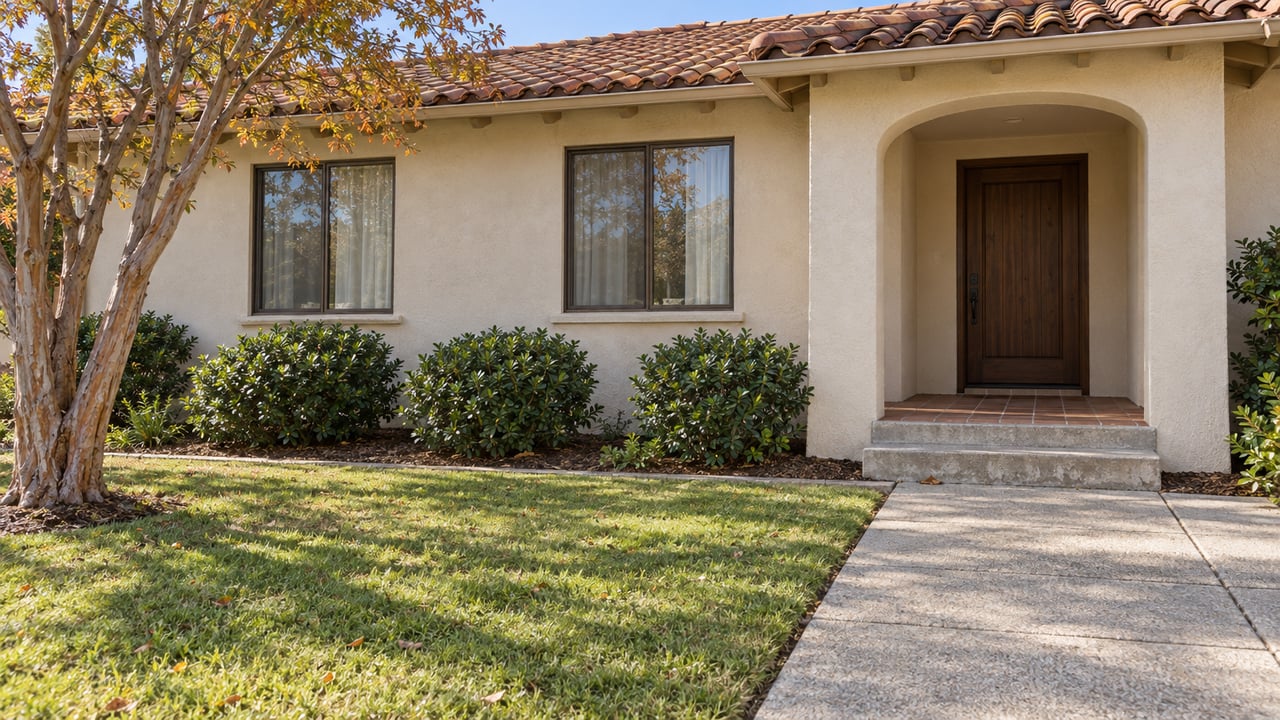
Two Water Utilities Serve Hacienda Heights, and 2027 Could Change How Far Apart Their Bills Are
November 5, 2026
November 5, 2026
Two single-family homes in Hacienda Heights can each use 10 units of water in a month and still get bills about $34 apart. Both homes have the standard 5/8-inch meter. Neither home is wasting water. They are simply served by different utilities, which charge for the same gallon in very different ways.
Hacienda Heights is unincorporated Los Angeles County, so there is no city water department. Rowland Water District is a public district, and it serves portions of unincorporated Hacienda Heights along with parts of Rowland Heights, La Puente, Industry and West Covina. Suburban Water Systems is a private utility regulated by the California Public Utilities Commission. Its San Jose Hills service area tariff names "portions of Covina, West Covina, Walnut, La Puente, Glendora, Hacienda Heights and adjacent unincorporated areas in Los Angeles County."
If you are comparing homes here, the utility serving a house is part of what that house costs to live in. On January 1, 2027, the gap between the two utilities will shift. Rowland's increase is already on paper. Suburban's 2027 rates are still pending at the CPUC.
The two utilities split the bill differently from the first line.
Rowland's single-family charge in 2026 is $48.03 a month for a 5/8-inch meter, before any water is used. The district explains that this fixed charge covers purchased water, maintenance, infrastructure replacement, water quality testing, billing and debt service. It also notes that single-family homes with a 1-inch meter installed for fire-flow requirements are billed at the 5/8-inch rate. Usage is billed in two tiers. The first 7 units each month get the lower rate, and every unit after that gets the higher one. One unit is 100 cubic feet, or 748 gallons.
Suburban's San Jose Hills residential schedule took effect August 15, 2026. Its service charge for a 5/8 x 3/4-inch meter is $16.97 a month. The lower block covers up to 20 units a month on that meter.
That difference in fixed charges is about $31 a month before either household turns on a tap, and it explains most of the gap. For a light user, the fixed charge is most of the bill. A Rowland customer has a lower threshold before the higher tier starts, so heavier use also pushes a Rowland bill up sooner.
Rowland also charges by elevation. Its service area is divided into six pressure zones, and a surcharge is added to every unit delivered above Zone 1. On its 2026 rates page, the district explains the surcharge this way:
"This surcharge is calculated to recover the additional costs of supplying potable water to these customers, including the energy costs of the pumping stations used to pump water up to the surface level for Zone 1 and to higher elevations for Zones 2 through 6 of RWD's retail water service area."
In practice, a house higher on the hillside pays more for each unit of water than a house in the flats, even when both get service from the same district. Here are 2026 single-family rates for each zone, taken from the district's Rules and Regulations effective January 1, 2026.
| Rowland pressure zone | First 7 units, per unit | 8+ units, per unit |
|---|---|---|
| Zone 1 | $4.59 | $5.33 |
| Zone 2 | $4.81 | $5.55 |
| Zone 3 | $5.25 | $5.99 |
| Zone 4 | $5.85 | $6.59 |
| Zone 5 | $6.25 | $6.99 |
| Zone 6 | $6.57 | $7.31 |
Suburban's rates also vary by location, but over a smaller range. It has three tariff areas, with block-one rates of $4.505, $4.689 and $4.890 per unit.
Using only the published base rates for a 5/8-inch meter, here is what a month at 10 units comes to for several addresses:
| Provider and area | Fixed charge | Usage charge at 10 units | Base monthly total, 2026 |
|---|---|---|---|
| Suburban, Tariff Area 1 | $16.97 | $45.05 | $62.02 |
| Suburban, Tariff Area 3 | $16.97 | $48.90 | $65.87 |
| Rowland, Zone 1 | $48.03 | $48.12 | $96.15 |
| Rowland, Zone 6 | $48.03 | $67.92 | $115.95 |
Within Rowland, the difference from the lowest zone to the highest is about $20 a month at that usage. From the lowest Suburban area to the highest Rowland zone, the difference is close to $54. At 20 units a month, a Rowland Zone 6 home comes to about $189 in base charges and a Suburban Area 1 home to about $107. These figures don't include surcharges or taxes.
Suburban's low fixed charge isn't the whole bill. The utility adds surcharges after the fact, on top of the per-unit rate. Its tariff lists a $0.091-per-unit WRAM surcharge effective September 21, 2026, and a $0.188-per-unit surcharge for pumped water, purchased water and purchased power, effective October 28, 2026. At 10 units, those two together add about $2.79 a month. That is small today. The bigger point is that a Suburban bill can change between rate cases without a new base rate.
Rowland also has a mechanism for changes between rate decisions. Starting January 1, 2026 and continuing through July 1, 2030, the district may automatically pass through wholesale water rate increases, with a cap that keeps the rates from more than doubling in a single fiscal year. Rowland can also add a Water Shortage Surcharge during declared drought conditions. For both utilities, the published rate sheet sets the minimum a bill can be, not the maximum.
The two utilities head into 2027 in different positions.
Rowland's board approved its rate schedule at its November 4, 2025 meeting. The schedule includes increases that may take effect each January 1 through 2030. The 2027 numbers are already published. The 5/8-inch fixed charge rises to $52.12, and Zone 1 rates rise to $4.99 for the first 7 units and $5.79 after that. Zone 6 rises to $7.14 and $7.94. Applied to the same 10-unit month, Rowland Zone 1 goes from $96.15 to about $104.42, and Zone 6 goes from $115.95 to about $125.92. The schedule continues up to a $66.59 fixed charge in 2030.
Suburban's 2027 rates depend on a case still before the CPUC. Suburban filed general rate case A.26-01-001 on January 2, 2026, asking to change rates beginning in 2027. According to the CPUC Public Advocates Office, the request would raise average system rates by about 41% by 2029. The Public Advocates Office protested the application and published its own recommendation.
| Year | Suburban's request | Average bill under request | Public Advocates' recommendation | Average bill under recommendation |
|---|---|---|---|---|
| 2027 | 19.41% | $99.72 | 1.81% | $83.66 |
| 2028 | 8.91% | $109.97 | 5.43% | $84.81 |
| 2029 | 8.15% | $119.35 | 4.35% | $85.73 |
These are averages across Suburban's whole system, not a bill for any particular Hacienda Heights street. They still show how wide the range is. In 2027, the difference between the two positions is about $16 a month on the average bill, and by 2029 it grows to more than $33. The CPUC decides the outcome. Until it does, a buyer of a Suburban-served home can't know the 2027 water cost. A buyer of a Rowland-served home can look it up.
The gap between the two utilities could narrow sharply, stay about where it is, or shift somewhere in between. Rowland's increase is predictable. Suburban starts from a much lower base, but its future rates are uncertain.
Rate sheets don't show which streets each utility serves or which pricing zone applies to a given address. Rowland's online bill calculator asks you to choose a pressure zone from a menu. Suburban says it serves all or portions of Hacienda Heights. The quickest way to answer these questions is an actual bill from the home.
Water is one of several recurring costs that change by address in this area. Our look at what's on a Whittier property tax bill besides the tax covers how a nearby city's water and sewer charges reach homeowners on a different schedule. For more about the community, see the Hacienda Heights neighborhood page.
Does every Hacienda Heights home get water from Rowland or Suburban? Both utilities list portions of Hacienda Heights in their service areas. Confirm the provider for any specific home on its bill.
When do Rowland's 2027 rates take effect? January 1, 2027, under the schedule the board approved in November 2025. Increases may follow each January 1 through 2030.
When will Suburban's 2027 rates be known? When the CPUC decides A.26-01-001. Until then, Suburban's requested 19.41% and the Public Advocates Office's recommended 1.81% for 2027 mark the range being argued.
This post is general information about published utility rates, not financial or legal advice. Please confirm the charges for a specific home with the provider and the right professional.
If you're weighing two Hacienda Heights homes and want to know what each one will cost to run after closing, Lisa Ancich can help you get the right bills and questions in front of you before you commit. Let's Connect.
Stay up to date on the latest real estate trends.
Get assistance in determining the current property value, crafting a competitive offer, writing and negotiating a contract, and much more. Contact me today.
GET IN TOUCH TO LEARN MORE
LISA ANCICH | CA DRE# 01261750
16571 WHITTIER BLVD WHITTIER, CA 90603