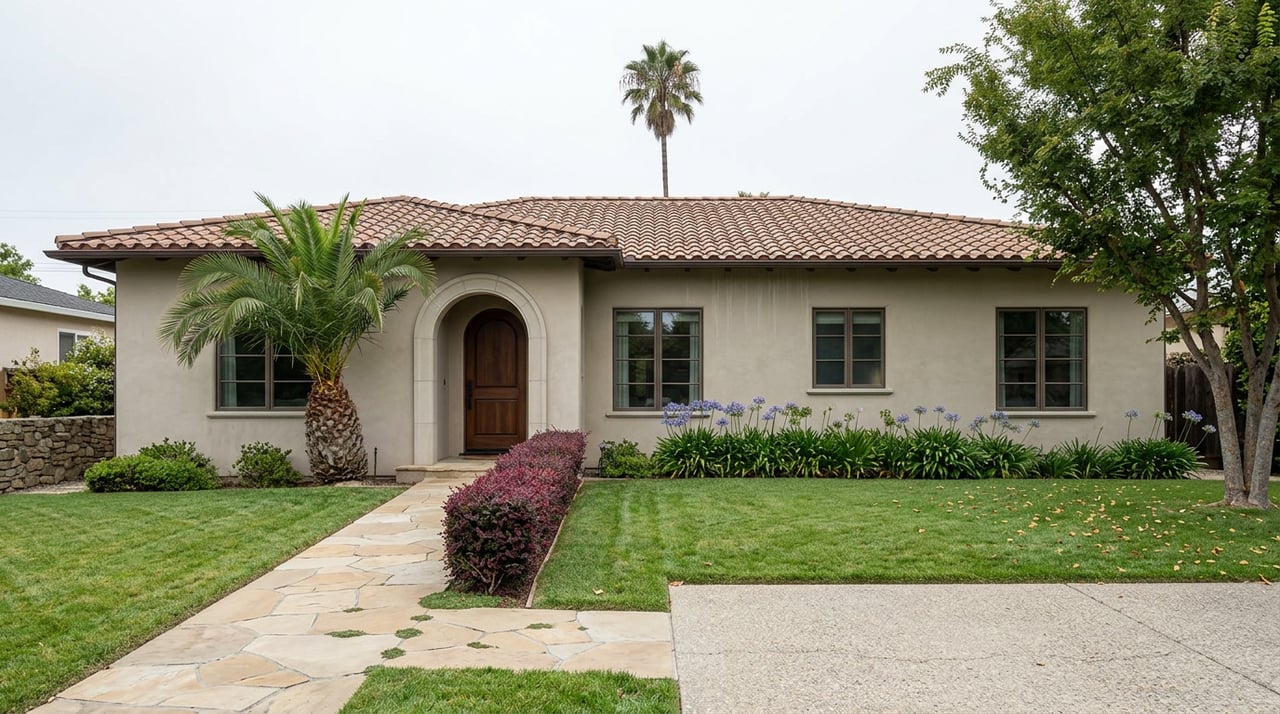
La Mirada Sewer Scopes: What Home Sellers Should Know
September 24, 2026
September 24, 2026
A twenty-three day escrow can stall on day nineteen, and the reason is rarely the thing anyone worried about at the offer table. Not the appraisal. Not the loan. It's a length of pipe nobody looked at until the buyer's inspector fed a camera down the vent stack and found forty feet of cracked clay under the driveway.
That scenario is common enough in La Mirada to be worth naming directly, because the city's own market pace makes it more likely, not less. Homes here have been moving fast and competitively through 2026, with many properties drawing multiple offers and some buyers waiving contingencies just to get an accepted deal. Speed is the story everyone tells about this market. What speed hides is that a waived inspection contingency does nothing to change what is actually inside the pipe, and La Mirada's housing stock has one specific, well-documented reason to check before that pipe becomes someone else's problem.
When a buyer waives the inspection contingency to win a multiple-offer situation, the inspection itself still matters. They are not changing the physical condition of the sewer lateral running from the house to the street. If that line collapses two weeks after close, the repair becomes a new problem to solve.
That distinction matters more in La Mirada than in newer subdivisions because of when this city was built. La Mirada grew out of the old Neff Estate into a planned residential community developed largely in the late 1950s and through the 1960s, on land that had previously been ranch and oil operations. The 100 acres the county purchased in 1956 for what is now La Mirada Community Regional Park and its golf course is still known locally as "The Grove," a nickname that has outlasted several generations of homeowners. That kind of continuity is charming in a neighborhood park. Underground, the age of the plumbing is worth checking, because much of the city's original housing stock was built within a similar period.
Walk the different pockets of La Mirada and the lots change shape, but the decade the pipe went into the ground mostly does not. Neff Park's curving planned-community streets, Creek Park and Windermere's larger established lots, the single-story homes near the Whittier hills edge in Gardenhill, the interior tracts around Balmoral and Alicante, the larger parcels along the golf course, and the later infill blocks in southeast La Mirada toward the Cerritos and Buena Park border all trace back to the same building wave. What varies is lot size and how much space a later owner had to remodel. What does not vary much is what is underneath the remodel.
Homeowners here tend to update visible features—new counters, refinished floors, fresh paint, and tidy landscaping—while replacing mechanical systems behind the walls less often. A home can present as move-in ready and still be running on the original sewer lateral it was built with in 1961. The kitchen tells you nothing about the pipe.
The city of La Mirada's own Public Works department addresses this directly in its resident FAQ. The lateral, the section of sewer line running from the house to and including the connection at the street main, is the property owner's responsibility to maintain and repair, not the city's. The FAQ also notes that these lines are typically sections of clay pipe joined with glue, and that the glue can separate over time while the clay itself cracks from ordinary soil settlement or seismic activity. If a parkway tree's roots have worked into that lateral, that's also the owner's problem to solve, with a licensed plumber, not a city crew.
Together, the build era and the ownership rule make the sewer lateral's age and condition relevant to a sale: the city has thousands of homes from that period, and the property owner is responsible for maintaining and repairing the line.
A pre-listing sewer scope costs a few hundred dollars and takes an afternoon. A mid-escrow discovery costs something different: leverage, time, and a chunk of the buyer pool.
| Found before listing | Found mid-escrow | |
|---|---|---|
| Who controls the timeline | The seller, on their own schedule | The buyer's inspector, on the contract's clock |
| Negotiating position | Priced in or already repaired | Reactive credit or repair request under deadline |
| Backup offers | Never needed | Often already moved on to other properties |
| Disclosure clarity | Known condition stated plainly | Late-arriving surprise, disputed cause and cost |
In a market where homes have been going under contract in a matter of weeks and some buyers are competing hard enough to waive protections just to get in, that backup-buyer column matters more than it would in a slower market. The pool of people willing to wait out a lateral repair mid-escrow is thinner when three other similar homes went pending the same week theirs did.
A sewer scope is not a demolition project. A plumber runs a camera through the line from an accessible cleanout or the roof vent stack and records what's there: root intrusion, bottom rot in the horizontal runs where corrosion collects first, channeling in aging clay, or a line that's simply fine for another decade. The report becomes part of the seller's disclosure picture, giving buyers information about the line.
For sellers weighing whether a repair or a relining is worth doing before going on the market, this is exactly the kind of pre-listing decision that fits inside a Compass Concierge plan, where the cost of preparation is handled up front and settled at closing rather than paid out of pocket while a home sits vacant. Whether the answer is "line's fine, here's the report" or "we relined it before listing," either version gives a buyer a clearer basis for evaluating the property.
Who is actually responsible for the sewer lateral in La Mirada? Per the city's Public Works FAQ, the property owner is responsible for the lateral running from the house to and including its connection to the main sewer line in the street.
Does a standard home inspection cover the sewer line? A general home inspection typically evaluates visible plumbing, fixtures, and drainage behavior at the surface. It does not see inside a buried pipe. That requires a separate camera-based sewer scope, which is a distinct service a buyer or seller arranges on top of the general inspection.
What if a neighbor's tree caused the damage? The city's guidance is direct on this point too: if a parkway tree's roots have intruded into a lateral, correcting it is the property owner's responsibility, and typically requires a licensed plumber regardless of whose tree it came from.
If you're weighing whether to get ahead of this before listing a home in La Mirada, or want a clear read on what your specific street and build era might be sitting on, Lisa Ancich has spent years walking sellers through exactly this kind of preparation before a home ever hits the market. Let's Connect and talk through what a clean, well-documented listing looks like for your home.
This article is general information, not legal, tax or financial advice. Consult a qualified professional about your situation.
Stay up to date on the latest real estate trends.


Get assistance in determining the current property value, crafting a competitive offer, writing and negotiating a contract, and much more. Contact me today.
GET IN TOUCH TO LEARN MORE

LISA ANCICH | CA DRE# 01261750
16571 WHITTIER BLVD WHITTIER, CA 90603