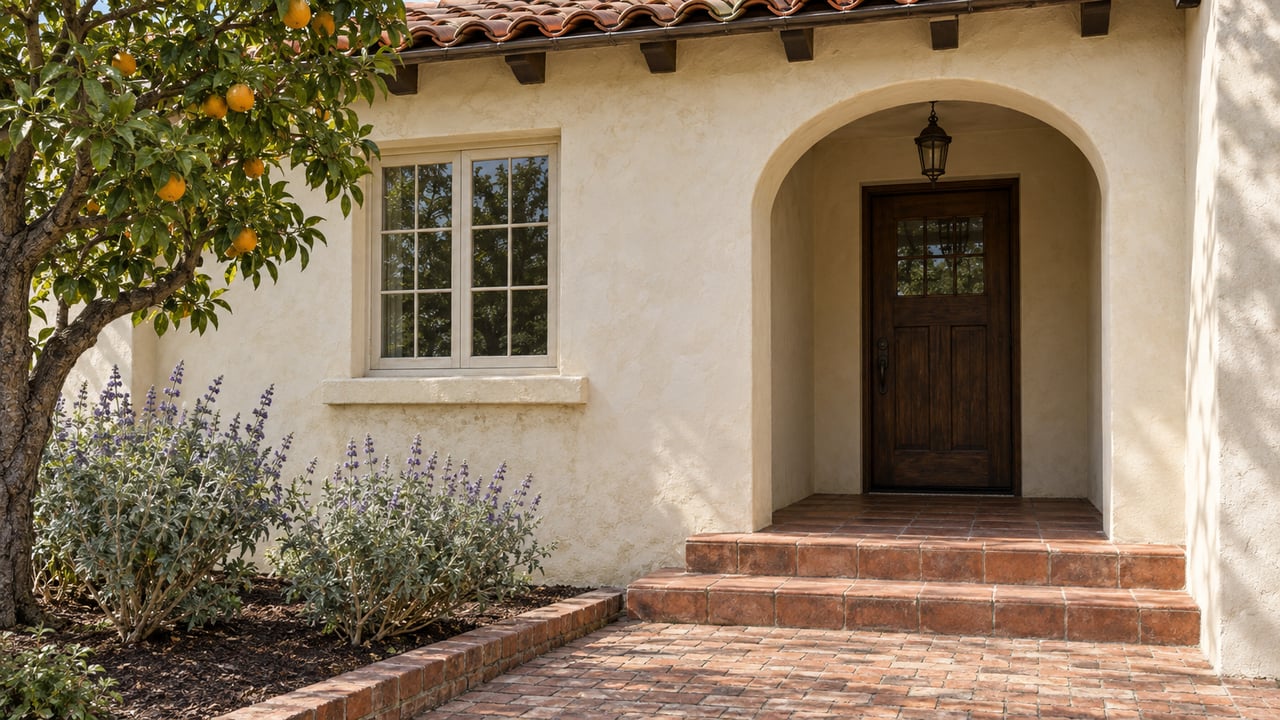
In Orange, a Historic Home's Mills Act Contract Comes With the Sale, and the City Is Reviewing Its Future
October 29, 2026
October 29, 2026
The City of Orange hasn't accepted a new Mills Act application since November 2024. On October 13, the City Council pushed its decision on the program to April 13, 2027, according to the Old Towne Preservation Association. That leaves one way to buy a historic Old Towne or Eichler home with a Mills Act contract. You buy one that already has a contract, and you take on everything in it.
That makes these contracts scarce for now, and it makes them something to negotiate over. City staff are also asking a question that bears on every one of them: whether, and how, the city might stop renewing existing contracts. Buyers and sellers in Old Towne, Fairhaven, Fairhills and Fairmeadow are working with both facts at once.
State law decides this, and the city has no say in it. In its October 13 report to Council, city staff explained that a Mills Act contract stays with the property and binds each new owner. A sale does not end the agreement, and the buyer takes on both its rights and its obligations. The California Office of Historic Preservation says the same.
The obligations are real work. Under the state contract rules summarized at MillsActOrange.com, the home must be preserved, and restored where needed, to the Secretary of the Interior's Standards. The city inspects inside and out before a new contract and every five years after that. Current Orange contract holders pay an annual filing fee, file an annual report on repairs and maintenance, and update the rehabilitation plan, Exhibit D of the contract, every ten years. If a buyer bought a home with unfinished rehab items on that plan, those items are now the buyer's.
The Eichler districts add another layer, with or without a contract. Fairhaven, Fairhills and Fairmeadow became local historic districts in 2018. Exterior projects there follow the Orange Eichler Design Standards, which ban adding a second story on top of the existing Eichler roof. So a buyer planning a vertical addition is up against the design standards, not the Mills Act contract.
This is why a contract can be worth more to a buyer than it was to the seller. Under Revenue and Taxation Code section 439.2, the Assessor values a Mills Act property from the rent it could earn, not from comparable sales. The Assessor takes a fair market rent, subtracts vacancy and normal operating costs, and divides what's left by a capitalization rate. For an owner-occupied home, that rate includes a 4% risk component. The tax bill uses the lowest of three numbers: the Mills Act value, the regular Prop. 13 value, or current market value. The Assessor recalculates it every year.
When a Mills Act home sells, the Assessor sets a new base year value. It doesn't send a supplemental tax bill for the restricted property. A sale usually raises the Prop. 13 number, but the rent-based number doesn't depend on what the buyer paid. The contract's tax benefit tends to grow when the purchase price runs well above what the seller's taxes were based on.
The Orange County Assessor once ran the numbers on a real example. It is from 2019, so the figures are only an illustration:
| 2019 Assessor illustration, 1909 owner-occupied house, 1,300 sq ft | Amount |
|---|---|
| Market value | $625,000 |
| Prop. 13 value | $572,220 |
| Monthly rent used | $2,200 |
| Net income after 5% vacancy and 25% expenses | $18,810 |
| Capitalization rate | 10.52% |
| Mills Act value | $178,728 |
In that example, the Mills Act value came out about 69% below the Prop. 13 value. Rates change every year and every property is different. A seller's current tax bill tells a buyer very little about their own. MillsActOrange.com puts it plainly: "the tax bill you inherit may not match what the seller paid."
Orange created its program in 1998. More than 200 properties have received the benefit. Staff's October report puts the active count at about 414 contracts. A September report counted 419 active properties, and the October report commits staff to reconciling incomplete records and setting an accurate baseline.
That pool stopped growing two years ago, and it may grow slowly once applications reopen. Orange removed its old 20-contract annual cap in 2018. The draft guidelines Council saw in September proposed no more than eight new contracts a year. Council continued that draft instead of adopting it. The same draft would have added an annual intake window from January 1 to April 30, a workplan with cost estimates, and a financial analysis comparing planned investment with expected ten-year tax savings.
None of that is final. The October report says staff will look at annual limits, a citywide cap on active contracts, limits per owner, and "whether any numerical limits are appropriate at all." Until those questions are settled, a buyer of a historic home without a contract can't plan on getting one. A seller with a contract has something that buyer can't get anywhere else right now.
The review covers more than new applications. Staff and the City Attorney will look at whether to keep the current rolling contract structure, or have the city start nonrenewal after a set number of annual extensions. Staff mentioned 15-year and 20-year participation periods only as examples for the analysis and said plainly that they "are not proposed program requirements." The review also covers how existing contracts are treated compared with future ones, along with a contract-by-contract audit of missing files, overdue inspections and unfinished work.
State law treats a sale, a nonrenewal and a cancellation as three separate events.
| Event | What happens to the contract |
|---|---|
| Sale or transfer | Contract continues and binds the new owner. A sale alone is not grounds for cancellation. |
| Nonrenewal, started by owner or city | Automatic extensions stop. The contract stays in effect for the rest of its term. |
| Cancellation | Only for breach or deterioration, after notice and a public hearing. State law imposes a fee based on current market value. |
Because each year adds a new year to the term, a contract is always about ten years from expiring until someone gives notice. Owners must give notice at least 90 days before the renewal date and the city at least 60. The cancellation fee is 12.5% of current market value. So if the city did start nonrenewal on a contract someone buys this year, the contract would wind down over its remaining term. It would not end at the next renewal date. How the tax value and the owner's obligations work during that wind-down is one of the questions staff plan to raise with the County Assessor.
Fees are on hold too. The City Manager recommended putting off the previously adopted fee increases until the review is done, through Resolution No. 11724. OTPA describes the annual fee increase in question as going from $100 to $782.
The review is open-ended, so the paperwork matters more than usual. If the home you're buying has a contract, ask for these early:
If you're selling, having these four items together before you list keeps a buyer's questions from becoming an escrow delay.
Can I apply for a new contract after I buy a historic home without one? Not right now. The city's Mills Act page says it isn't accepting applications while the program is under review.
Does selling a Mills Act home risk cancellation? Under current state law, a sale or transfer by itself is not grounds for cancellation.
Do Eichler homes qualify? Contributing properties in the Eichler historic districts are eligible. Non-contributors have to regain enough design integrity to be reclassified first.
This post is general information, not legal, tax or financial advice. Please confirm how a contract and its assessment apply to your property with the County Assessor, an attorney or a tax professional.
If you own a Mills Act home in Old Towne or one of the Eichler tracts and are thinking about selling, or you're weighing an offer on one, I'm glad to help you pull together the contract, the rehabilitation plan and the inspection history before anyone signs. With Lisa Ancich, you'll have a calm, organized plan for a transaction that carries more paperwork than most. Let's Connect.
Stay up to date on the latest real estate trends.





Get assistance in determining the current property value, crafting a competitive offer, writing and negotiating a contract, and much more. Contact me today.
GET IN TOUCH TO LEARN MORE

LISA ANCICH | CA DRE# 01261750
16571 WHITTIER BLVD WHITTIER, CA 90603